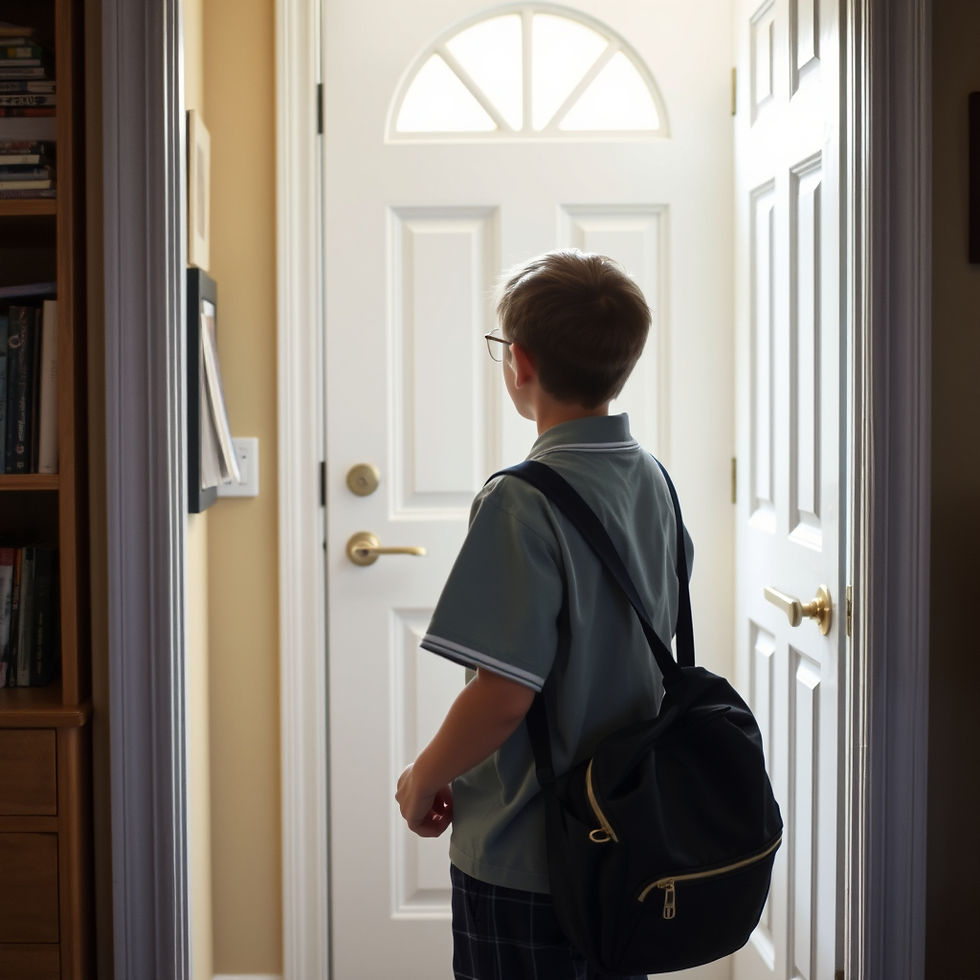
School Anxiety: When your child simply can't face school
Many parents have experienced it.
A child who once attended school happily suddenly begins refusing to go. Mornings become increasingly difficult, anxiety levels rise, and what looks like defiance from the outside is often something very different.
School anxiety is becoming increasingly common, particularly among children with SEND, autism, ADHD, sensory differences and PDA profiles.
What does school anxiety look like?
Every child is different, but common signs can include:
Complaining of headaches or stomach aches before school
Difficulty sleeping on school nights
Emotional outbursts before leaving home
Increased anxiety or low mood
Exhaustion after school
Refusing to attend school altogether
For many children, these behaviours are not a choice. They are signs that the child is struggling to cope.
Looking beyond the behaviour
When a child says they "hate school", it is often worth asking why.
Possible reasons might include:
Social difficulties
Sensory overwhelm
Academic pressure
Anxiety about making mistakes
Bullying or friendship challenges
Feeling misunderstood or unsupported
Understanding the underlying cause is often the first step towards finding solutions.
Three things parents can try
1. Listen without immediately problem solving
Children often need to feel heard before they are ready to accept help.
Instead of jumping straight into solutions, try: "That sounds really hard. Tell me more."
2. Focus on regulation before learning
An anxious child is unlikely to be ready for learning.
Supporting emotional regulation through rest, movement, preferred activities and connection can often be more effective than pushing through.
3. Celebrate small wins
Progress doesn't have to mean full attendance immediately.
Getting dressed, entering the school grounds, attending for a short period or engaging with learning at home may all be significant achievements.
Remember:
School anxiety is not a sign of poor parenting, laziness or lack of resilience.
Many children who experience school anxiety are working incredibly hard simply to manage their day.
With understanding, appropriate support and realistic expectations, children can regain confidence and reconnect with learning in ways that work for them.
What can I do to help?
I support children who have experienced school anxiety, emotionally based school avoidance and difficulties accessing traditional education.
Through personalised tutoring and relationship-based support, my aim is to help learners rebuild confidence and engage positively with learning once again.